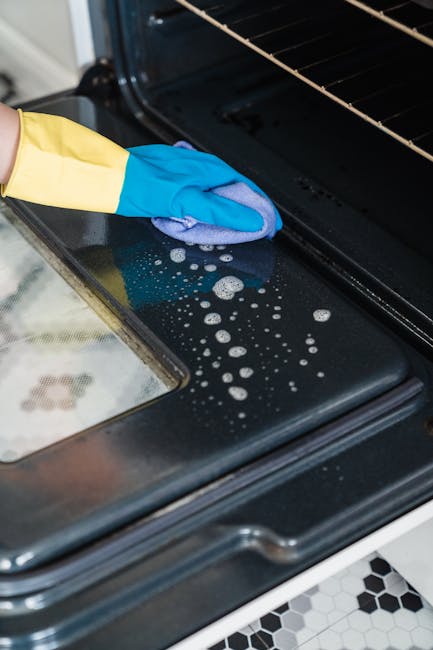
Finchley landlord guide oven cleaning rules from Barnet Council
If you rent out a property in Finchley, oven cleaning can look like a small detail until it suddenly becomes the detail. A greasy oven in a check-out report, a tenant dispute, or a last-minute rush before new occupants move in can turn into real hassle. This guide explains the Finchley landlord guide oven cleaning rules from Barnet Council in plain English, with a practical focus on what landlords usually need to do, what tenants commonly expect, and how to keep things tidy, fair, and defensible.
To be fair, most landlords are not trying to impress anyone with a sparkling grill rack. They just want the property to be handed over in a condition that feels clean, safe, and properly maintained. The trick is knowing where normal wear ends and where cleanliness standards begin. That is where a clear process, a sensible check-out routine, and good record-keeping make all the difference.
Below, you will find a step-by-step approach, common mistakes to avoid, and practical advice you can actually use. If you also need broader home care support, it can help to look at end of tenancy cleaning, deep cleaning, or a specialist oven cleaning service when the job is beyond a quick wipe-down.
Table of Contents
- Why Finchley landlord guide oven cleaning rules from Barnet Council matters
- How Finchley landlord guide oven cleaning rules from Barnet Council works
- Key benefits and practical advantages
- Who this is for and when it makes sense
- Step-by-step guidance
- Expert tips for better results
- Common mistakes to avoid
- Tools, resources and recommendations
- Law, compliance, standards, or best practice
- Options, methods, or comparison table
- Case study or real-world example
- Practical checklist
- Conclusion
- Frequently asked questions
Why Finchley landlord guide oven cleaning rules from Barnet Council Matters
For landlords in Finchley, oven cleanliness is part of the wider condition of a rental property. It affects how professional the handover feels, whether a tenant believes the property has been properly maintained, and whether the next occupant moves in with a good first impression. Barnet Council does not usually issue a simple one-line rule that says, "clean ovens this exact way." In practice, landlords need to follow reasonable standards, keep the property safe and hygienic, and avoid disputes over what counts as fair wear and tear.
This matters because ovens are one of those places where hidden neglect builds up quietly. At first it is just a bit of baked-on residue. Then the smell starts. Then the fan tray looks like it has had a difficult year. When a tenant opens the oven and sees that, trust can go out of the window. And once trust goes, the rest of the inventory conversation gets harder too.
There is also a safety angle. Grease build-up, burnt food debris, and damaged seals can affect performance and create avoidable risks. A landlord who keeps on top of cleaning is not just being neat; they are acting responsibly. In a busy North London letting market, that counts for a lot.
Expert summary: the practical goal is not perfection for its own sake. It is to make sure the oven is clean enough to be used safely, looks well maintained, and stands up to reasonable check-in or check-out scrutiny.
How Finchley landlord guide oven cleaning rules from Barnet Council Works
The phrase can sound more formal than it is. In reality, the process usually works like this: the landlord sets an expected cleaning standard, the tenancy agreement or inventory records describe the condition, and the final inspection checks whether the oven has been left in a condition consistent with normal use and the agreed responsibilities.
For many Finchley rentals, the most useful benchmark is simple: the oven should be clean enough that a new tenant would not reasonably object to using it. That does not always mean showroom-perfect. It means no heavy grease, no strong odours, no food crusts, no unsafe build-up, and no obvious signs of neglect. If the oven was professionally cleaned before move-in, it is sensible to expect a similar standard at check-out unless the agreement says otherwise.
In practice, landlords should think in layers:
- Pre-tenancy condition: record the oven's state before occupation.
- During tenancy: monitor the appliance only where access and notices are appropriate.
- End of tenancy: compare the final condition against the inventory and tenancy terms.
- Post-check-out: decide whether cleaning, repair, or replacement is needed.
If you use a professional cleaning provider for turnover work, it helps to pair appliance care with wider property cleaning such as house cleaning or one-off cleaning. For bigger resets after works or occupancy changes, after builders cleaning can also be relevant, especially where dust and residue have spread beyond the kitchen.
Key Benefits and Practical Advantages
Getting oven cleaning right saves time, money, and awkward conversations. That sounds obvious, but the actual benefits go further than avoiding complaints.
- Fewer disputes at check-out: a clean oven is easier to sign off when the evidence is clear.
- Better tenant experience: people notice kitchen standards straight away.
- Stronger property presentation: a fresh oven supports the impression of a well-run home.
- Reduced maintenance issues: regular cleaning helps prevent stubborn build-up.
- Cleaner handover records: photos, invoices, and inventory notes are easier to defend if challenged.
There is a subtle commercial advantage too. Landlords who keep appliances in good order tend to spend less energy arguing over small deductions, and more time keeping the property occupied. Not glamorous, perhaps, but effective. Let's face it, a calm check-out is worth a lot.
For landlords managing several properties or working with letting agents, consistency matters even more. A repeatable oven-cleaning standard makes it easier to compare properties, brief contractors, and stay on top of renewal cycles.
Who This Is For and When It Makes Sense
This guide is most useful if you are a private landlord, portfolio landlord, letting agent, or property manager dealing with rental homes in Finchley and the wider Barnet area. It also helps if you are preparing for a tenancy change, responding to a complaint, or deciding whether a professional clean is worth booking before new tenants arrive.
It makes particular sense when:
- a tenancy is ending and you want a fair, documented handover;
- the oven has heavy grease or burnt-on residue;
- you are comparing whether to clean, repair, or replace an appliance;
- the property has been empty for a while and needs a reset;
- you want the kitchen to feel genuinely ready, not just "tidied up."
For some landlords, the smartest route is to combine appliance work with a broader property refresh. A well-planned domestic cleaning service may cover the whole flat, while a specialist oven cleaner handles the tricky parts that general cleaning often misses, such as trays, runners, seals, and extracted debris.
If you are dealing with a deeper reset after prolonged occupancy, odd smells, or visible kitchen neglect, it is usually better to act before the final inspection. Waiting rarely improves an oven. Sadly, ovens do not clean themselves. If only.
Step-by-Step Guidance
Here is a practical way to handle oven cleaning standards without overcomplicating the process.
- Check the tenancy paperwork first. Look at the inventory, the check-in photos, and any specific cleaning clauses. If the property was handed over with a professionally cleaned oven, that should be reflected in the expected return condition.
- Inspect the oven properly. Open the door, check the glass, trays, racks, knobs, fan area, and seals. Smell matters too. A clean-looking oven can still smell greasy when it heats up.
- Decide whether the issue is surface-level or deep-set. Light splashes and fingerprints are one thing. Thick carbon build-up, smoker-like staining, or stubborn burnt deposits are another.
- Choose the right route. For light maintenance, a basic clean may be enough. For tenancy turnover or heavy build-up, use a specialist service.
- Document before and after. Take clear photos in daylight if possible. One picture of the glass door, one of the interior, and one of the trays is often enough to tell the story.
- Carry out the cleaning or arrange it. If booking a professional, confirm what is included. Check whether the cleaner removes trays, degreases fan covers, and deals with the area around the oven.
- Re-check when the oven cools. The real test is not just how it looks when wet. It is how it looks and smells once everything has dried.
A small but useful point: don't forget the surrounding area. An oven can be spotless and the tenancy still feels messy if the splashback, extractor edge, or surrounding floor has been ignored. If the rest of the kitchen needs attention too, a combined clean is often more efficient. You may also want to consider hard floor cleaning in high-traffic kitchen zones where crumbs and grease tend to settle.
Expert Tips for Better Results
These are the small things that usually make a disproportionate difference.
- Use the inventory as your anchor. Do not rely on memory. Photos beat assumptions every time.
- Warmth helps, but caution matters. A mildly warm oven may loosen residue, but never work on a hot appliance.
- Remove removable parts first. Trays and racks are often where the worst build-up sits.
- Clean the door glass separately. It is one of the first things tenants notice, and one of the easiest to overlook.
- Use a realistic standard. A rented oven should be hygienic and presentable. It does not need to look brand new unless the agreement says so.
- Ask whether a deep clean is cheaper than a replacement. Sometimes it is. Sometimes it is not. A decent contractor will tell you honestly.
One thing we see often: landlords book a general clean, then wonder why the oven still looks rough. That is usually because oven interiors need proper dwell time, specialist products, and a bit of elbow grease. No miracle spray. No magic. Just method.
And if you are coordinating multiple tasks at once, it helps to use one dependable cleaning provider rather than juggling separate people for every room. A reliable cleaning company can make scheduling simpler and reduce the chance that something gets missed in the rush.
Common Mistakes to Avoid
Most oven-cleaning disputes are not caused by bad intentions. They come from small mistakes that snowball.
- Assuming "clean enough" means the same thing to everyone. It does not. Put the expected condition in writing where possible.
- Forgetting to photograph the appliance before a tenancy starts. Without evidence, disagreement becomes a guessing game.
- Leaving oven cleaning until the final day. Then you are in a panic, and panic cleaning is rarely great cleaning.
- Ignoring odours. Grease smell and smoke taint are often as important as appearance.
- Using harsh products on delicate finishes. That can damage coatings or seals and create a repair problem you did not need.
- Not checking extractor areas and nearby surfaces. A half-clean kitchen can still fail the common-sense test.
Another classic mistake is trying to deduct costs without enough proof. If a landlord believes the oven was left in poor condition, the better route is a clear record, a fair assessment, and an invoice that shows what was actually done. That is just cleaner all round, in every sense.
Tools, Resources and Recommendations
You do not need a huge toolkit to manage oven cleaning standards, but the right resources keep things organised.
| Tool or resource | What it helps with | Landlord takeaway |
|---|---|---|
| Inventory report | Records the oven's starting condition | Use this as your baseline before and after the tenancy |
| Camera or phone photos | Shows condition, staining, and cleaning progress | Take pictures in similar lighting each time |
| Checklist for handover | Prevents missed tasks | Keep it short and repeatable |
| Professional oven cleaner | Handles heavy build-up and detailed appliance work | Worth it when standard cleaning will not do the job |
| General cleaning support | Helps the rest of the property match the oven standard | Useful for end-of-tenancy turnover and busy periods |
If the wider property needs a reset, services like home cleaners or cleaners can help with broader room-by-room work, while the oven gets specialist attention. For landlords managing multiple appliances, that split of labour is often the sweet spot.
For suppliers and service expectations, the most practical resource is your own paperwork: tenancy agreement, inventory notes, move-in photos, and invoices. It is not flashy, but it is reliable. And honestly, reliable wins.
Law, Compliance, Standards, or Best Practice
When landlords ask about Barnet Council and oven cleaning, the key point is usually not a single council-issued cleaning rule. It is the broader legal and practical duty to maintain the property in a safe and habitable condition, then return it in line with the tenancy agreement and inventory evidence. In other words, the standard is shaped by tenancy terms, property condition, and reasonable expectations, rather than a one-size-fits-all slogan.
Best practice in Finchley is to treat oven cleaning as part of responsible property management. That means:
- setting clear expectations at the start of the tenancy;
- keeping records of appliance condition;
- using fair, evidence-based assessments at the end of the tenancy;
- arranging timely cleaning or maintenance where needed;
- avoiding inflated claims for normal wear and tear.
If the oven is damaged rather than dirty, that becomes a separate issue. Cleaning will not solve a faulty heating element, broken door seal, or failing thermostat. A landlord should distinguish grime from defect. It sounds obvious, but in real life those two get mixed up more often than people admit.
For trust and safety, it also helps to work with providers who are clear about their own operational standards. You can review practical company information such as health and safety guidance, insurance and safety, and terms and conditions before booking any contractor. Those pages can be useful when you want confidence around process, not just price.
Options, Methods, or Comparison Table
Landlords usually have three sensible approaches: do it yourself, use a general cleaner, or hire a specialist oven cleaning service. Each has a place.
| Method | Best for | Pros | Watch-outs |
|---|---|---|---|
| DIY cleaning | Light residue or routine upkeep | Low cost, quick for small jobs | Can be time-consuming; easy to miss deep grime |
| General cleaning | Standard tenancy turnover | Covers the wider property in one visit | May not fully detail the oven interior |
| Specialist oven cleaning | Heavy build-up, odours, check-out concerns | More thorough, better for stubborn residue | Needs clear scope and scheduling |
For many Finchley landlords, the best result comes from combining methods. A specialist handles the oven, while a broader cleaner tidies the kitchen and surrounding rooms. If carpets or soft furnishings also need attention between tenants, it can be efficient to bundle related tasks such as carpet cleaning, sofa cleaning, or window cleaning into the same handover period.
Case Study or Real-World Example
A landlord in Finchley has a one-bedroom flat that comes back after a 14-month tenancy. The inventory shows the oven was clean at move-in, with no staining and just light use wear. At check-out, the glass door is streaked with grease, the rack has baked-on residue, and there is a faint burnt smell when the oven heats up.
At that point, the landlord has a choice. They could argue over it, discount it as "just use," or compare the condition to the inventory and decide whether a clean is enough. In this case, a specialist clean is arranged before the next tenant arrives. The oven is returned to a hygienic, presentable state, the kitchen smell disappears, and the handover moves on without a major dispute.
Nothing dramatic. But that is the point. Good landlord management is often boring in the best possible way. No shouting. No long email thread. Just evidence, a fair decision, and a property ready for the next person.
If the rest of the flat also needed attention, the landlord could have added end of tenancy cleaning to cover the wider handover and leave fewer loose ends. Simple, tidy, done.
Practical Checklist
Use this quick checklist before and after a tenancy change. It keeps the process grounded.
- Check the tenancy agreement for any cleaning clause.
- Review check-in inventory photos of the oven.
- Inspect the oven interior, exterior, door glass, racks, and seals.
- Look for odours as well as visible grease.
- Decide whether a light clean or deep clean is needed.
- Take clear before-and-after photos.
- Keep invoices and notes if professional cleaning is booked.
- Confirm the oven is cool, dry, and safe before handover.
- Check nearby kitchen surfaces so the final presentation feels consistent.
- Store the evidence with the tenancy record in case of a later query.
If you want a quick rule of thumb, here it is: if you would hesitate before using the oven yourself, the next tenant will probably notice too.
Get a free quote today and see how much you can save.
Conclusion
The Finchley landlord guide oven cleaning rules from Barnet Council are best understood as a practical standard rather than a single fixed instruction. Keep the oven clean, safe, and properly documented. Match the condition against your inventory. Be fair about wear and tear. And when the build-up is too much for a normal wipe-down, bring in help early rather than late.
That approach protects the property, supports a smoother handover, and makes life easier for everyone involved. It is one of those small landlord habits that pays back quietly over time. No drama. Just a better outcome. And in property management, that is usually the nicest result of all.
Frequently Asked Questions
Do Barnet Council rules say exactly how clean an oven must be?
Not usually in a simple, detailed way for every tenancy. The practical expectation is that the oven should be left in a clean, safe, and reasonable condition, in line with the tenancy agreement and inventory evidence.
Is a landlord responsible for oven cleaning at the start of a tenancy?
Often, yes, if the property is being handed over to a new tenant and the oven is meant to be clean on arrival. The exact responsibility depends on the tenancy setup, but a clean start is the norm in most rental homes.
Can a landlord charge a tenant for a dirty oven?
Possibly, but only where the oven has been left beyond normal wear and tear and there is evidence to support the claim. Inventory records and photos matter a lot here. Without them, deductions can become difficult to justify.
What counts as normal wear and tear for an oven?
Light use marks, minor surface staining, and general ageing can be considered normal. Heavy grease, burnt-on carbon, unpleasant odours, and obvious neglect are usually treated differently.
Should I use a professional oven cleaner or do it myself?
If the oven is lightly soiled, DIY may be fine. If the build-up is stubborn, the tenancy is ending, or you want a clearer result for check-out, a specialist oven cleaner is usually the safer bet.
How do I prove the oven was left dirty?
Use check-in and check-out photos, inventory notes, and if possible a dated invoice or report from a cleaner. Good documentation is the difference between a fair deduction and a messy dispute.
Does the whole kitchen need cleaning if only the oven is dirty?
Not always, but a partially cleaned kitchen can still feel unfinished. In real terms, landlords often get a better result when the oven and the surrounding kitchen surfaces are dealt with together.
Is it worth booking end of tenancy cleaning as well as oven cleaning?
Yes, if the property needs more than appliance cleaning. A broader end of tenancy clean can make the handover much smoother, especially where the kitchen, floors, and other rooms all need attention.
What if the oven is damaged, not just dirty?
Then cleaning is only part of the issue. A broken element, seal, or control fault is a maintenance matter, not a cleaning matter. It is sensible to separate the two before making any decision about costs or repairs.
How often should landlords arrange oven cleaning in rental properties?
That depends on tenancy length and use, but at minimum it makes sense to assess the oven at each changeover. For longer lets, periodic inspection is useful too, especially if the property has a lot of kitchen use.
What is the best way to avoid oven-related disputes?
Be consistent. Record the starting condition, explain expectations clearly, inspect fairly at the end, and keep the evidence. Most disputes fade when the paperwork is strong and the standard is reasonable.
Where should I start if the oven is too dirty for a normal clean?
Start with a proper inspection, then book a specialist clean rather than trying to force a quick fix. If the whole property needs attention, combine the oven work with broader cleaning support so the finish feels complete, not half done.